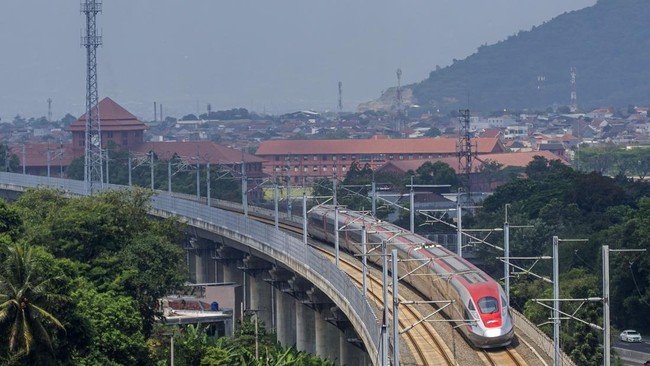
Jakarta, Lintasnusa.com – Indonesia’s high-speed rail operator, KCIC (Kereta Cepat Indonesia China), has revealed that kite-related disturbances continue to pose a significant threat to the operation of the Whoosh high-speed train service connecting Jakarta and Bandung.
Since 2024, the company has recorded at least 452 kites and kite strings found along the Whoosh railway corridor, raising concerns over safety and service reliability. The incidents have affected train operations on both the Jakarta–Bandung and Bandung–Jakarta routes, prompting intensified monitoring and public awareness efforts.
According to Emir Monti, a total of 452 kites and their strings were removed from areas surrounding the operational tracks between 2024 and May 2026. Most of the findings were concentrated in the Padalarang, Cimahi, and Bandung sections of the railway line.
A Serious Threat to High-Speed Rail Safety
While kite flying may appear harmless, it can create major risks for high-speed rail infrastructure. Unlike conventional rail systems, the Whoosh service relies on an overhead electric power system that supplies electricity to trains traveling at speeds of up to 350 kilometers per hour.
Kite strings—especially those made from synthetic materials or coated with conductive substances—can become entangled in overhead power lines, potentially causing electrical disruptions, equipment damage, or operational delays.
Even a seemingly minor incident can have significant consequences when dealing with high-speed rail technology, where safety standards require maximum precision and reliability.
“The presence of kites and kite strings near railway infrastructure is not merely a nuisance but a serious safety concern,” KCIC has repeatedly emphasized in public awareness campaigns.
Concentrated Incidents Around Urban Areas
The majority of kite-related findings have been recorded in the densely populated areas of Padalarang, Cimahi, and Bandung, where kite flying remains a popular recreational activity, particularly during dry and windy seasons.
These areas are located near sections of the Whoosh corridor, increasing the likelihood that kites can drift into railway infrastructure.
Strong winds often carry kites beyond open fields and residential neighborhoods, causing them to become trapped in overhead electrical systems or railway facilities.
As a result, KCIC personnel routinely conduct inspections along the route to identify and remove potential hazards before they interfere with train operations.
Impact on Whoosh Services
The discovery of kites and their strings along the tracks has occasionally forced operational adjustments to maintain safety standards.
In some cases, railway officers must inspect affected sections before trains are allowed to proceed at normal speeds. Such precautions can lead to temporary delays as technicians ensure that electrical systems and supporting infrastructure remain free from obstruction.
For a service designed around speed, punctuality, and precision, even brief disruptions can affect scheduling and passenger convenience.
Although KCIC has not reported any major accidents directly linked to kite interference, the company continues to treat every incident seriously due to the potential risks involved.
Public Cooperation Remains Essential
To address the issue, KCIC has intensified educational campaigns targeting communities located near the high-speed rail corridor. Residents are being urged not to fly kites near railway infrastructure and to remain aware of the dangers posed by kite strings around electrified systems.
The company has also worked with local governments, community leaders, and schools to spread awareness about the risks associated with kite flying near operational rail lines.
Officials stress that maintaining the safety of the Whoosh network requires cooperation from the public, particularly in areas adjacent to the railway corridor.
Protecting Indonesia’s Landmark High-Speed Rail Project
As Southeast Asia’s first high-speed railway, the Whoosh service represents one of Indonesia’s most significant transportation infrastructure investments. Maintaining uninterrupted and safe operations is therefore a top priority for both railway operators and regulators.
The removal of 452 kites and kite strings over a two-year period highlights an often-overlooked challenge facing modern rail systems: the impact of everyday community activities on critical infrastructure.
While kite flying remains a cherished pastime in many Indonesian communities, KCIC hopes increased public awareness will reduce future incidents and help ensure that Whoosh continues to provide safe, reliable, and efficient transportation between Jakarta and Bandung.
With passenger demand for high-speed rail continuing to grow, preventing avoidable disruptions has become an important part of safeguarding the long-term success of Indonesia’s flagship rail project.